My Creativity Manifesto
creation >> consumption

Preparing to do the thing isn't doing the thing.
Scheduling time to do the thing isn't doing the thing.
Making a to-do list for the thing isn't doing the thing.
Telling people you're going to do the thing isn't doing the thing.
Messaging friends who may or may not be doing the thing isn't doing the thing.
Writing a banger tweet about how you're going to do the thing isn't doing the thing.
Hating on yourself for not doing the thing isn't doing the thing. Hating on other people who have done the thing isn't doing the thing. Hating on the obstacles in the way of doing the thing isn't doing the thing.
Fantasizing about all of the adoration you'll receive once you do the thing isn't doing the thing.
Reading about how to do the thing isn't doing the thing. Reading about how other people did the thing isn't doing the thing. Reading this essay isn't doing the thing.
The only thing that is doing the thing is doing the thing.
From https://strangestloop.io/essays/things-that-arent-doing-the-thing
I noticed something last year: I could tell you about every new AI model, but I hadn't shipped much in months. I'd consumed hundreds of hours of content, but I wasn't creating.
The math was absurd. 20 hours a week, I was reading about how other people build. Only a few hours building my own.
Six months ago I tried flipping it. More than 50% of the time should go into creation. Anything.
The first week was uncomfortable. I kept reaching for my phone to check Twitter. My brain wanted input, not output. Creating from nothing felt like trying to start a cold engine.
But somewhere in week two, something shifted. Not dramatically. Just... differently.
Create More Than You Consume
This is the principle, but I'm still figuring out what it means.
Some days, it's literal: four hours of coding, one hour of reading papers. Other days, it's lighter: morning building, evening learning. The ratio matters less than the direction.
What surprises me is how creation compounds while consumption doesn't. The tutorial I watched last month? Gone. The simple Discord bot I built? I learnt something while debugging it.
I don't have rules about this. When I'm stuck on a technical problem, I'll spend hours going through the codebase. When inspiration hits at 10 PM, I'll code until my eyes hurt.
The hard part isn't the time management. It's the identity shift. Going from "person who knows about things" to "person who makes things" means accepting that most of what you make will be mediocre.
Which leads to the next problem.
Try Everything, Expect Nothing
When you first start creating more, you have no idea what's worth creating.
My first month was chaos. A half-built RAG pipeline that only worked with PDFs. Three paragraphs of a blog post about prompt engineering. An agent framework that was just a while loop with GPT-4 calls. Random Jupyter notebooks with names like "test-agent-delete-later."
None of it mattered. And still all of it mattered.
Because buried in that mess were patterns. I noticed I abandoned model training ideas quickly but could spend hours on prompt agent engineering. I discovered I enjoyed writing about AI systems more than training models. I learned that my "quick experiment" agents often became my favorites.
This phase is embarrassing. Your GitHub looks like a yard sale. Your blog has three posts on completely unrelated topics. You're trying on identities like clothes, and none of them fit quite right.
But that's how taste develops. Not through consumption—reading about what good design looks like—but through creation. Through making bad things and knowing they're bad. Through making mediocre things and sensing they could be better.
I'm still in this phase, honestly. Still throwing spaghetti at walls. The difference is I'm starting to notice which walls are worth throwing at.
The Finishing Problem
Here's where I struggle most: finishing things.
Starting is easy when you're excited. Middle is hard when you hit technical debt. End is nearly impossible when you realize the thing you're building isn't as good as you imagined.
My Substack is still 80% graveyards. The initial burst of energy, then nothing.
But that 20% which gets finished? That's where everything interesting happens.
When you push through and ship something—even something small, even something embarrassing—you join a different group. Not "people with ideas" but "people who execute." The gap between these groups is bigger than I realized.
My rule now is that if anything feels worth doing, then it gets to proof of concept. Not polished. Not perfect. Just functional enough that someone else could understand what I was trying to do.
This means my portfolio is full of half-baked projects. A chatbot that only works with web search. An agent that crashes on unexpected inputs. A blog with no theme.
But they exist. They're real.
Width Versus Depth
This is where my philosophy gets muddy.
Part of me wants to go deep to master one technology, one domain, become the person people call for that specific thing. The specialist path. Clear, focused, valuable.
Another part sees how everything connects: how understanding embeddings improves your ability to build RAG systems, how learning about human cognition improves your prompt design, and how building projects improves your ability to structure workflows.
I'll spend a week studying models, then switch to learning agent architectures, and finally dive into technical writing. It feels scattered, and it probably is.
But occasionally, these different threads weave together into something interesting. An end-to-end AI system where I actually understand the full pipeline. A technical blog post informed by both ML theory and engineering practice.
Maybe the answer isn't choosing between width and depth but accepting seasons of each. Deep dives when curiosity demands it. Broad exploration when you're feeling stuck.
I don't have this figured out. Including it here because it's part of the reality.
Design your Environment
I try to organise my desk setup for optimal deep work.
I have a sit-stand desk, a wide screen hanging on an arm, and a mechanical keyboard with aesthetics. I play a playlist every morning (lofi hip-hop, volume at 30%). Browser tabs are pre-opened to the tools I'll need. I have a mic to enable prompt dictation, a mouse with ultra scroll, and I browse in Comet.
When everything external is consistent, all your energy can go into the work itself. No decisions about where to sit, what music to play, or which tool to open first. Just straight into creation.
I've noticed other creators do this, too. They go to the same coffee shop, use the same table, carry the same notebook and pen, and walk the same route to think through problems.
It's about removing friction between intention and action, about making the start of creation as automatic as brushing your teeth.
Sometimes this means coding until 2 AM because the setup is working and stopping would break the spell. Sometimes it means closing the laptop at 3 PM because the magic isn't there and forcing it would be worse than stopping.
Systems for Different Modes
I've noticed I'm actually three different people: an engineer, a researcher, and a writer.
Engineering mode needs constraints. When I'm building an agent, infinite possibilities kill progress. So I set arbitrary limits: two hours to get a working prototype. Use only libraries I already know. No reading documentation unless I'm genuinely stuck.
The system: Brainstorm → Design → Vibe code → Iteratre
Research mode is the opposite. It needs space to wander. When I'm exploring a new paper or technique, rushing kills understanding.
The system: Filter papers → Extract → Find new ideas → Implement → Find issues → Improve
Sometimes I'll spend three days reading about a mechanisms and build nothing. That used to feel like waste. Now I realize it's investment. The building that comes after is always better.
Writing mode needs momentum. If I try to perfect every sentence, I write nothing.
The system: Source literature → Add my insights → Write → Rewrite
These modes blur, obviously. Sometimes I'm engineering while researching—testing hypotheses in code. Sometimes I'm writing to understand what I engineered. But having different systems for different work helps me not feel guilty when research doesn't produce code, or when engineering doesn't produce insights.
Creation isn't one thing. Trying to optimize for all types at once optimizes for none.
The Consumption Paradox
Here's what nobody tells you about creating more than you consume: you still need to consume. Just differently.
I no longer read productivity blogs, but I obsessively read papers on Arxiv. I don't watch motivational videos, but I listen to Lightcone and Latent Space for hours. I don't follow thought leaders on Twitter, but I chat with Deepwiki, learning how projects actually get built.
The consumption that remains is purposeful. Directed. I consume to solve specific problems, not to feel productive.
This creates a weird gap. I miss out on a few things. I probably use outdated frameworks because I haven't followed best practices.
Is this a problem? Maybe. Do I care? Less each day.
Because the alternative of staying current with everything while creating nothing was definitely a problem.
What This Actually Means
I want to be careful not to prescribe anything. Your version will look different. But here's what mine looks like:
Mornings are for making. Whatever I'm most excited about could be code, writing, or tinkering with a design. I don't consume until lunch unless I'm stuck on something specific.
Afternoons depend on energy. High energy means continuing the morning project. Low energy means switching mediums.
Evenings are open. Sometimes I catch up on papers, watch talks. Sometimes I keep creating if something's flowing. Sometimes I do neither and just think.
Weekends are for experiments. Things I'm curious about but can't justify during the week.
The schedule isn't the point. The point is having creation be the default, consumption be the exception.
Why Greatness Cannot Be Planned
By doing more experiments, we increase our chances of moving towards greatness, which cannot be planned.
Just watch this video.
Where This Goes
Six months in, I can't claim dramatic results. My salary hasn't doubled. I haven't launched a successful product. I don't have a following.
What I have:
A collection of small projects
Slightly better engineering skills
Much better debugging skills
A clearer sense of what kind of AI work I enjoy
Less anxiety about keeping up with everyone else
More satisfaction at the end of each day
Is this enough? I think so. The bar was low. I was creating almost nothing before.
The philosophical bit (take it or leave it): There's something about making things that feels fundamental. Not spiritual exactly, but essential. Like we're supposed to be creators, not just consumers.
Time works differently when I'm deep in making something that is even trivial. Problems feel solvable, and anxiety goes quiet.
This might be flow state dressed up in meaning. But even if that's all it is, it's enough reason to keep going.
If You're Thinking About This
Start smaller than you think. If you're currently at zero, two hours of creation and six hours of consumption is still a win.
Pick something you can finish today. Not plan. Not research. Actually finish. A design doc. A research idea. A working POC.
Most of it will be bad. That's not failure. That's the process. Every bad thing teaches you something that consumption never could.
Lets build.
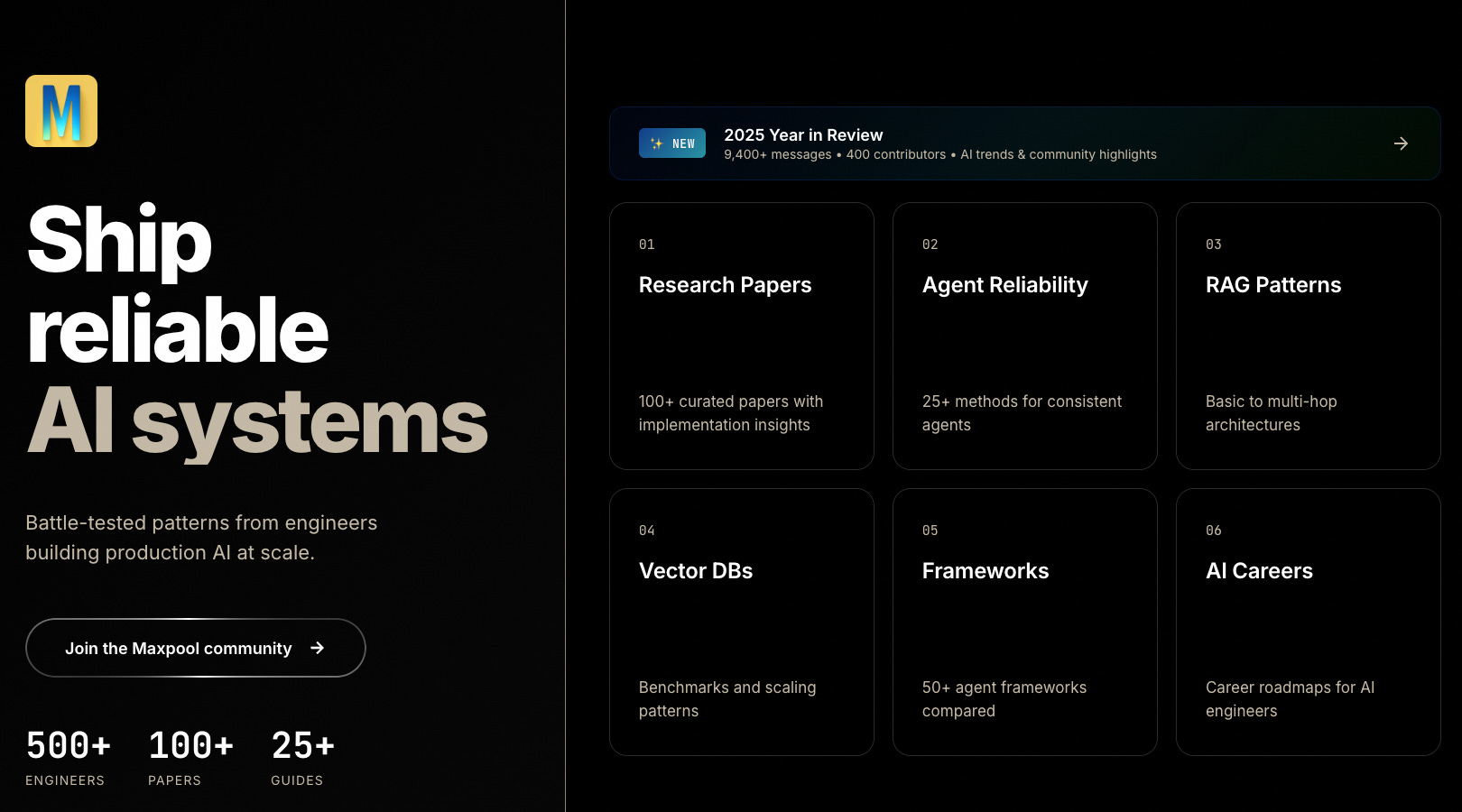
Here are my two new projects.
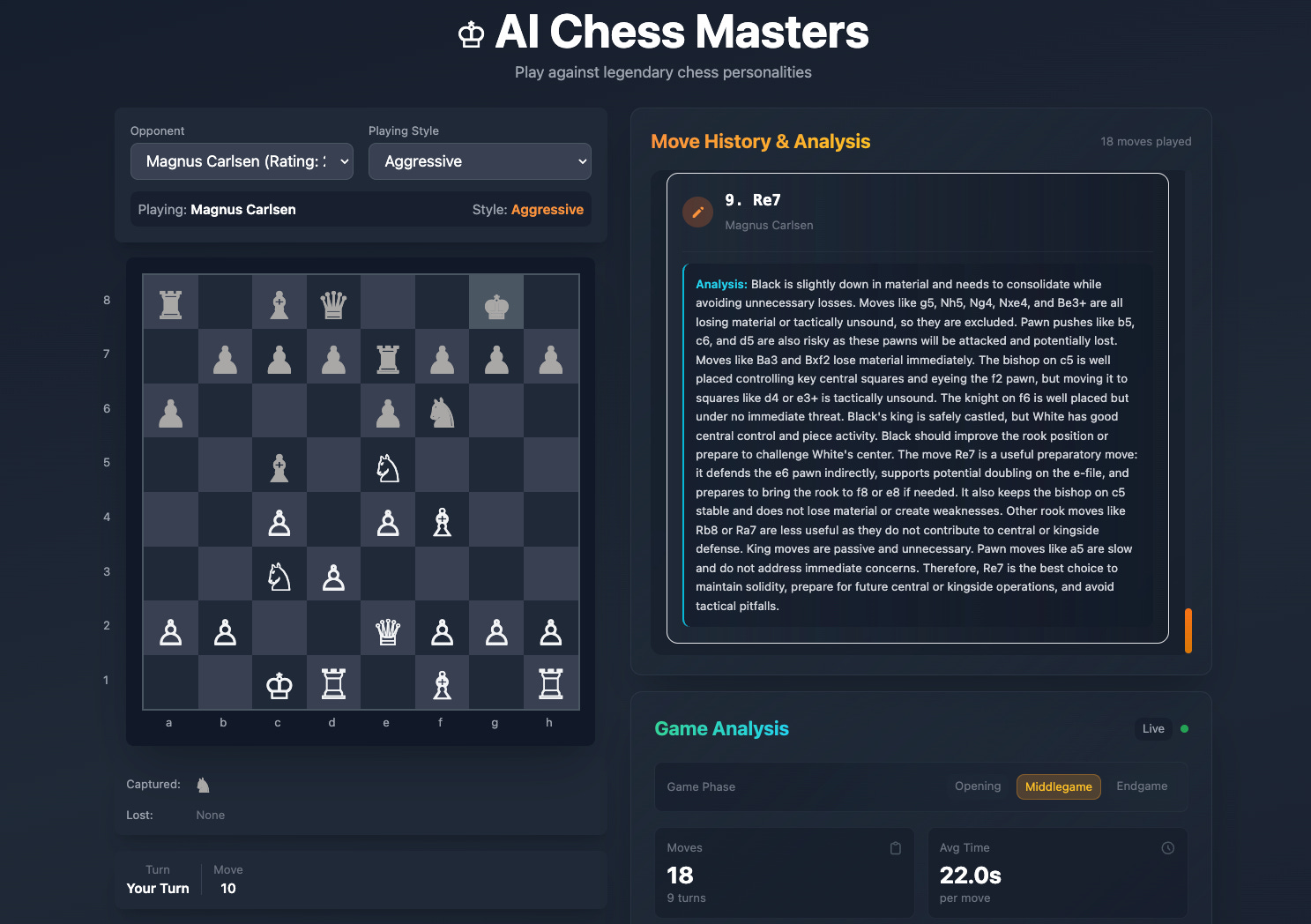
I use LLMs to play chess with grandmasters and see their thought process.
It’s not perfect but it makes chess much more fun.
https://github.com/bhavsarpratik/chess-with-grandmasters